What Size Solar Battery Do You Need To Run Air Conditioning Overnight In Darwin?
Eco Sparks Solar & Electrical Contractors • August 26, 2026
Battery sizing is the question Darwin homeowners ask most often once they have decided a battery system makes sense — and it is the one that most general guides answer badly, because they use southern Australian assumptions about overnight consumption that simply do not apply in the Top End.
In Darwin, the load that defines battery sizing is air conditioning. Running one or two split systems through a hot, humid night is not optional for most households — it is the baseline. Everything else in the sizing calculation sits on top of that.
This guide works through how to estimate your overnight consumption, what common battery sizes can realistically deliver, and how Darwin-specific conditions change the calculation.
Start With the Load, Not the Battery
The right way to size a battery is to start with what you need to run and work backward to the capacity required — not to pick a popular battery size and hope it covers your usage.
For a typical Darwin household, the overnight load consists of:
- Air conditioning: one or two split systems running from around 9pm to 6am (approximately nine hours). A standard 2.5–3.5kW residential split system draws roughly 0.8 to 1.2kW under moderate load in a well-insulated room. In Darwin's heat and humidity, real-world draw tends to sit at the higher end of that range
- Refrigerator: a typical household fridge draws around 100–150W on average, running intermittently through the night
- Essential lighting and devices: phone chargers, fans, TVs, and other standby loads — typically 100–300W combined depending on the household
This is the load you are sizing for. The battery needs to cover it reliably through a full night, with capacity to spare.
Worked Example: A Typical 3–4 Bedroom Darwin Home
Here is a straightforward calculation for a household running two split systems overnight.
- Two split systems at 1.0kW average draw each × 9 hours = 18kWh
- Fridge at 0.12kW average × 9 hours = 1.1kWh
- Other essentials at 0.2kW × 9 hours = 1.8kWh
- Total overnight consumption: approximately 21kWh
This is the gross consumption figure. What you need from the battery is not the same as the nominal capacity of the battery — because of depth of discharge.
Usable Capacity vs Nominal Capacity: What the Numbers Actually Mean
Battery specifications list nominal capacity — the total energy the battery can store. But most lithium batteries used in residential solar systems should not be discharged to zero, because doing so consistently reduces the battery's lifespan. Manufacturers specify a recommended depth of discharge (DoD) — typically 80 to 90 per cent for quality lithium iron phosphate batteries.
This means a battery with a nominal capacity of 13.5kWh has a usable capacity of roughly 10.8 to 12.2kWh depending on the DoD setting.
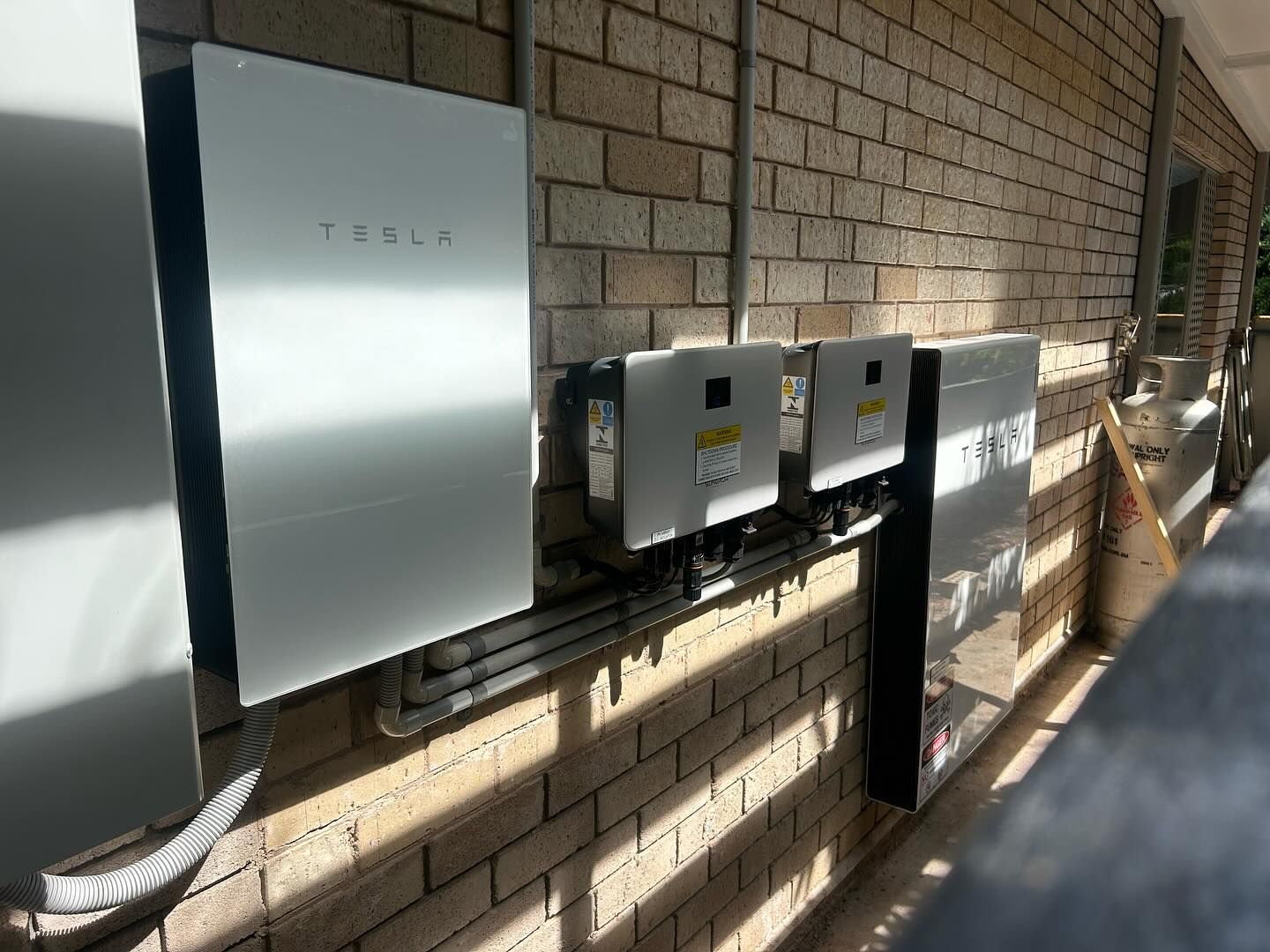
For the worked example above — 21kWh of overnight consumption — a single 13.5kWh battery falls well short. Even two of them at around 24kWh nominal gives you roughly 19–22kWh usable, which is tight for a hot Darwin night with both systems running at higher draw.
Common battery sizes and what they realistically deliver overnight:
- 10kWh nominal (≈8–9kWh usable): covers one split system overnight plus essentials. Not sufficient for two systems through a full Darwin night
- 13–14kWh nominal (≈10.4–12.6kWh usable): covers one split system comfortably plus essentials, or two systems for a shorter portion of the night
- 16–20kWh nominal (≈12.8–18kWh usable): approaches the capacity needed for two split systems through a full Darwin night
- 20kWh+ or stacked systems (multiple batteries): the appropriate range for two-system households wanting reliable overnight coverage plus a wet-season blackout buffer
The honest summary for a household running two split systems through the night: you are looking at 20kWh or more of nominal capacity to do it comfortably. One standard residential battery will not cover it.
How Darwin's Climate Changes the Sizing Calculation
Several Darwin-specific factors push battery sizing requirements higher than southern Australian equivalents suggest.
Higher overnight temperatures mean higher air conditioning draw. A split system working against a 28°C night draws more than one working against an 18°C night. Darwin's overnight temperatures during the build-up and wet season regularly sit above 28°C, with high humidity increasing the effective load further.
Wet-season blackout buffer: Darwin's wet season brings storm events and grid outages that can last several hours or longer. Homeowners who want the battery to cover both overnight consumption and a potential grid outage need to size for that combined scenario — not just the standard overnight load. This typically means adding a buffer of 20 to 30 per cent above the calculated overnight consumption figure.
Battery placement and temperature: lithium batteries perform best and last longest when installed in moderate temperatures. In Darwin, batteries installed in poorly ventilated roof spaces or direct sun exposure will operate at reduced efficiency and degrade faster. Proper installation in a shaded, ventilated location is a component of effective sizing — a battery that is consistently hot will not deliver its rated usable capacity reliably. This is something to confirm with your installer at the assessment stage.
How Much Solar Pairs With This Battery Capacity?
A battery that cannot be reliably recharged from solar generation during the day is not a complete solution. For a 20kWh battery system to be fully recharged on most days, the solar array needs to generate at least that much surplus energy after daytime household consumption is met.
In Darwin's dry season with high solar irradiance, a 10kW array on a well-oriented roof will typically generate 40–50kWh per day. After daytime consumption, the surplus available to charge a battery is substantial. In the wet season, overcast days reduce generation significantly, which is one of the reasons wet-season sizing accounts for a buffer — the battery may not be fully recharged every day.
The solar array size and battery capacity are interdependent variables. Sizing one without considering the other produces a system that underperforms in practice.
When Oversizing for Independence Makes Sense
Some Darwin homeowners are looking for genuine energy independence — the ability to operate largely or fully off-grid, particularly through storm season. This changes the sizing calculation considerably, as the battery needs to carry the household through multiple cloudy days with reduced solar input.
For households in this situation, the off-grid and hybrid system considerations go beyond the overnight sizing calculation covered here. Our off-grid solar page covers the additional factors that apply when independence rather than overnight coverage is the goal.
Sizing Is Property-Specific
The worked example above is a starting point, not a prescription. Your actual overnight consumption depends on your specific air conditioning units, how well your home is insulated, how many people are in the house, and your habits. The right battery size for your property is determined by an assessment of your actual usage — ideally from your electricity bills and metering data — not from a general guide.
Our solar battery system in Darwin assessments start with your consumption data and work forward to a recommended system size, rather than starting with a product and working backward. If you want to know what capacity your household actually needs, a free on-site assessment is the practical next step.
Contact Eco Sparks Solar & Electrical Contractors to arrange a no-obligation battery sizing assessment for your Darwin property.